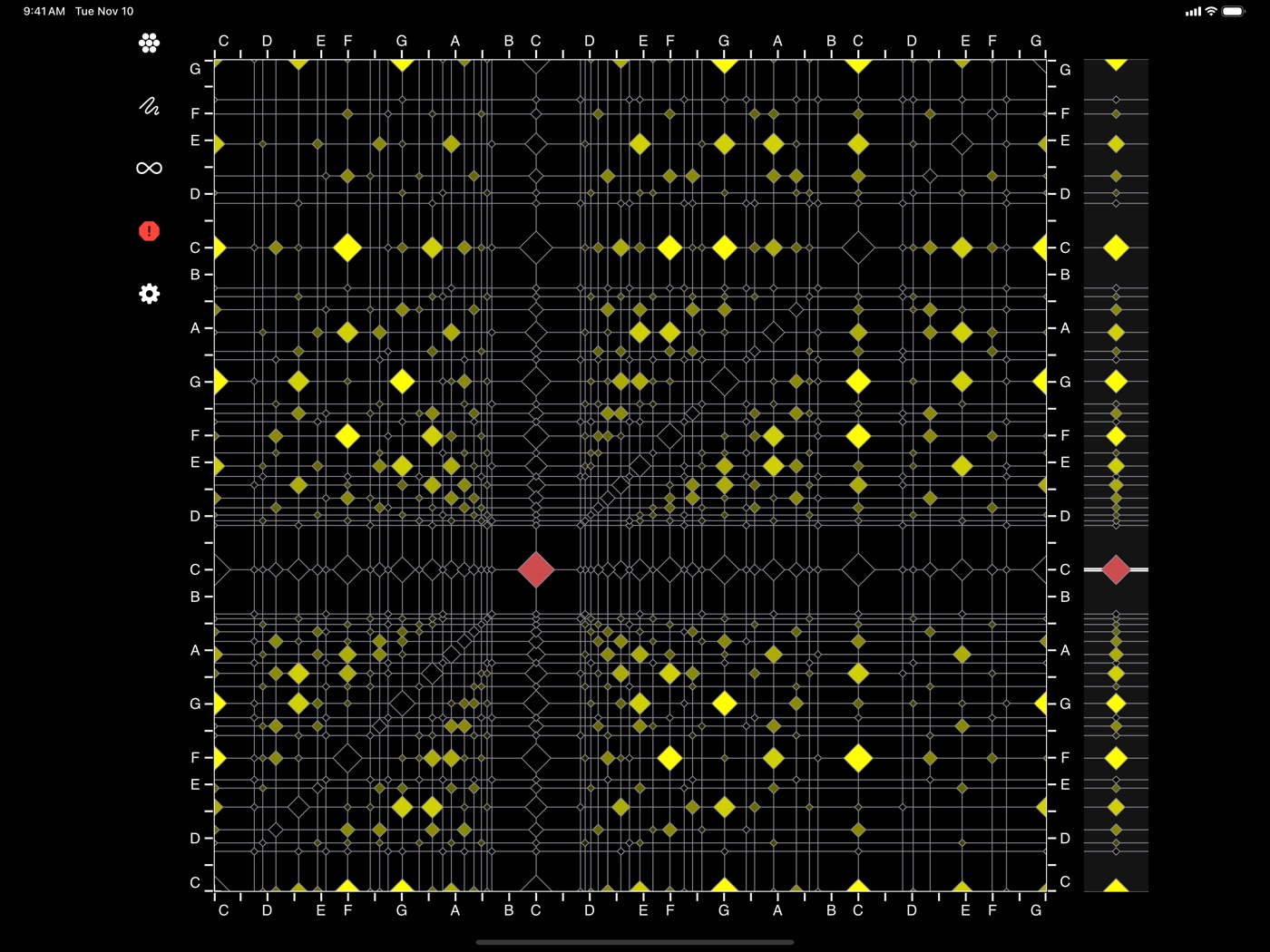
Glass Bead Game III is an instrument for iPad and Mac. A drone holds one note, and you move up to three more tones around it on a map of pure intervals, with an Apple Pencil, a finger, a keyboard or a mouse. I use it for teaching and for my own playing. It is free on the App Store.
Version 3.0 replaces the 2024 app. It is a complete rebuild.
How it works
Against a steady drone, an interval that is almost in tune beats: you hear a slow wobble where two frequencies nearly line up. The intervals that stop the wobble are the pure ones, whole-number ratios like 3:2 and 5:4. That is just intonation, and it is why the screen is a grid of those ratios rather than the twelve keys of a piano.
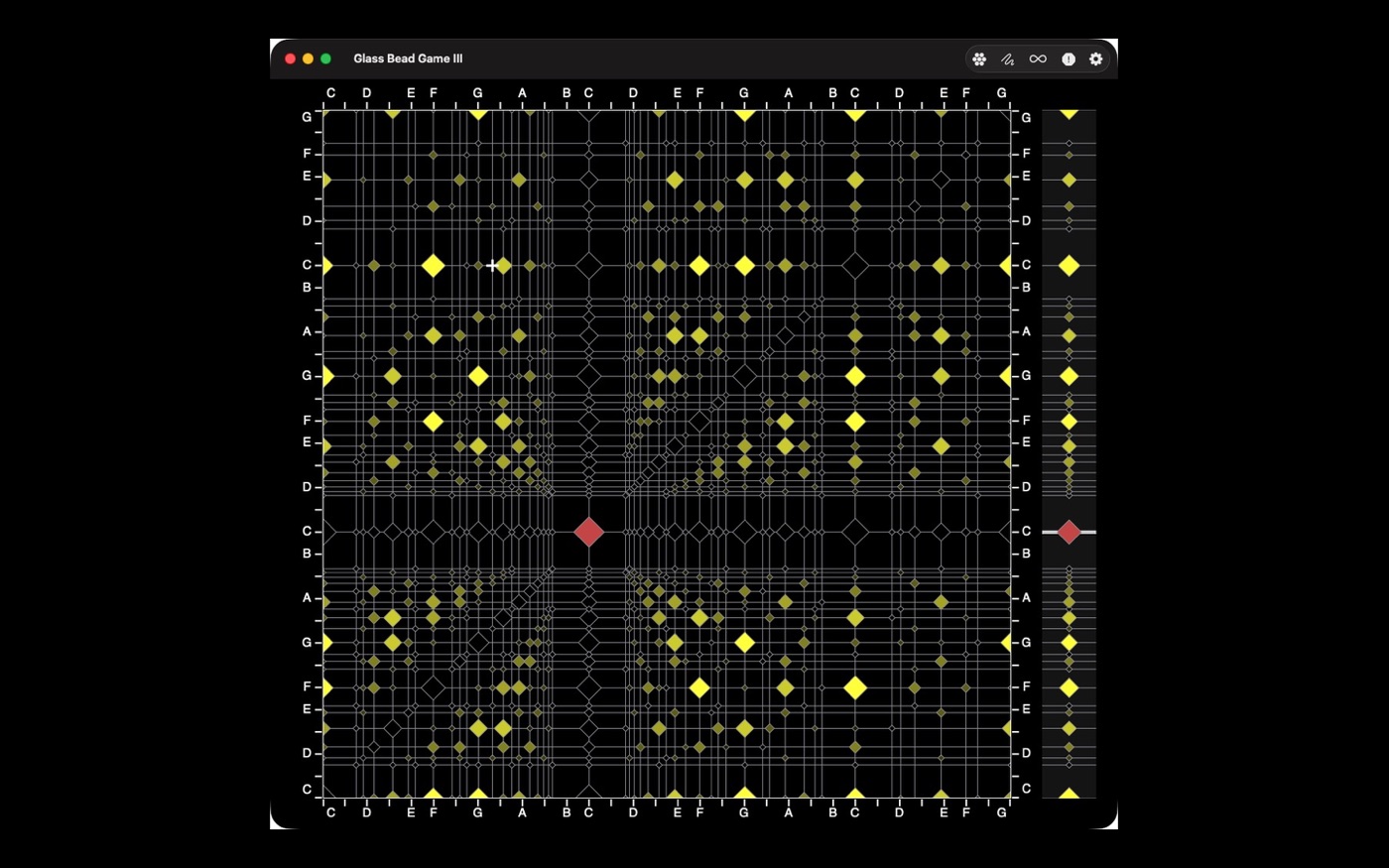
The two axes are the pitches of two moving tones. Each line is a pure interval against the drone, and each diamond is a spot where all three tones agree. Move the pencil and you hear the tones slide into tune, and out of it. Paths across the grid make melodic shapes you would not find on a keyboard, with a loose kinship to older drone-based music.
The name comes from Hermann Hesse’s novel, whose imaginary game mixes music and mathematics. It came to mind the first time I saw the grid.
What’s new in 3.0
- A third moving tone, for four voices against the drone.
- Glides between pitches, toggled or held with Shift.
- Keyboard and mouse play on iPad and Mac, with keys you can remap.
- Apple Pencil Pro squeeze holds notes, and a MIDI sustain pedal works too.
- MIDI in and out. It plays outboard synths and Eurorack over MPE, takes input from controllers and sequencers, and sets your synth’s pitch bend range for you.
- A dissonance field, an optional shading of how rough each spot between the diamonds sounds, based on Helmholtz’s work on beating.
- A second screen for performance: plug in a projector and the audience sees the grid without the controls.
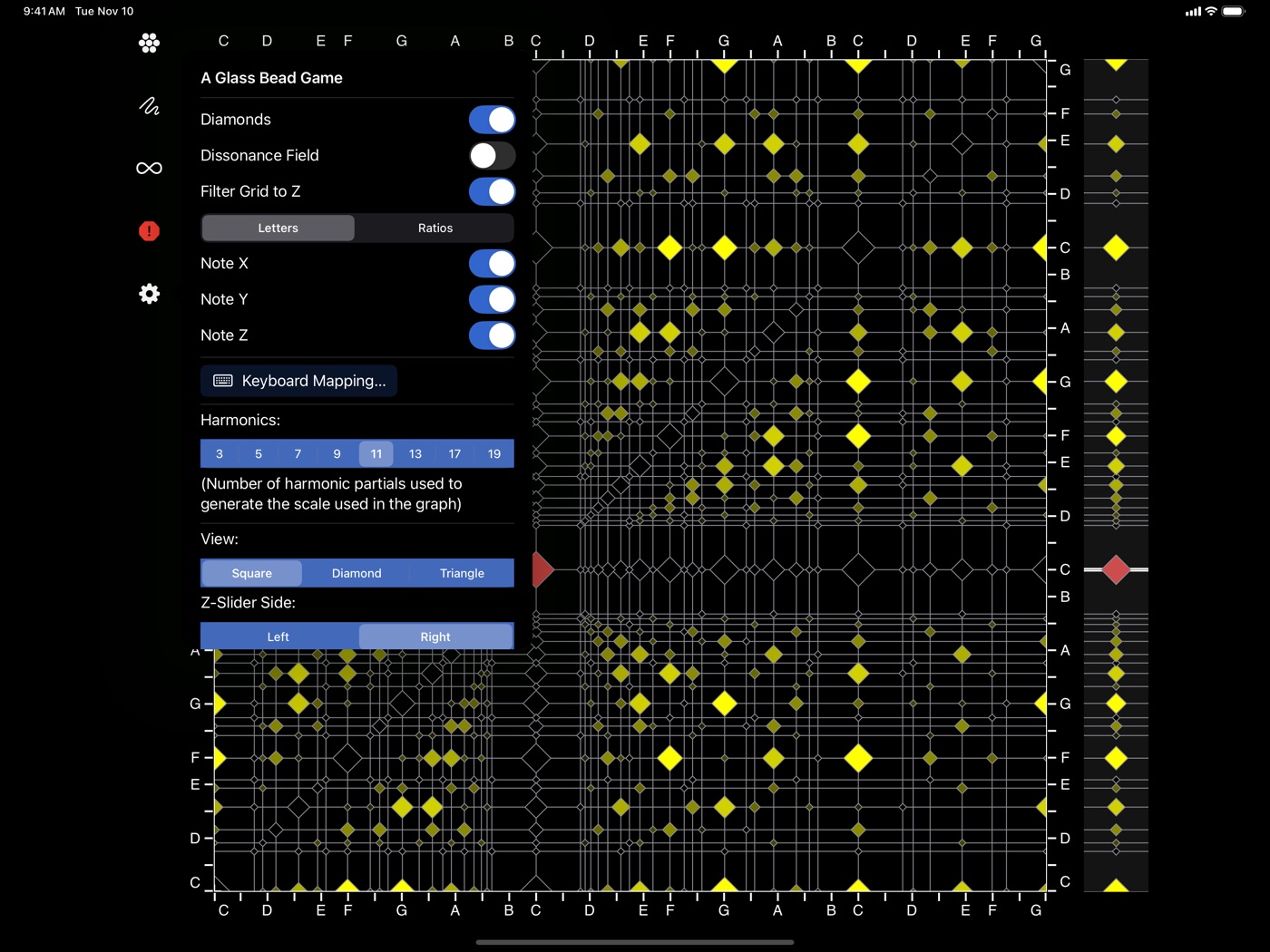
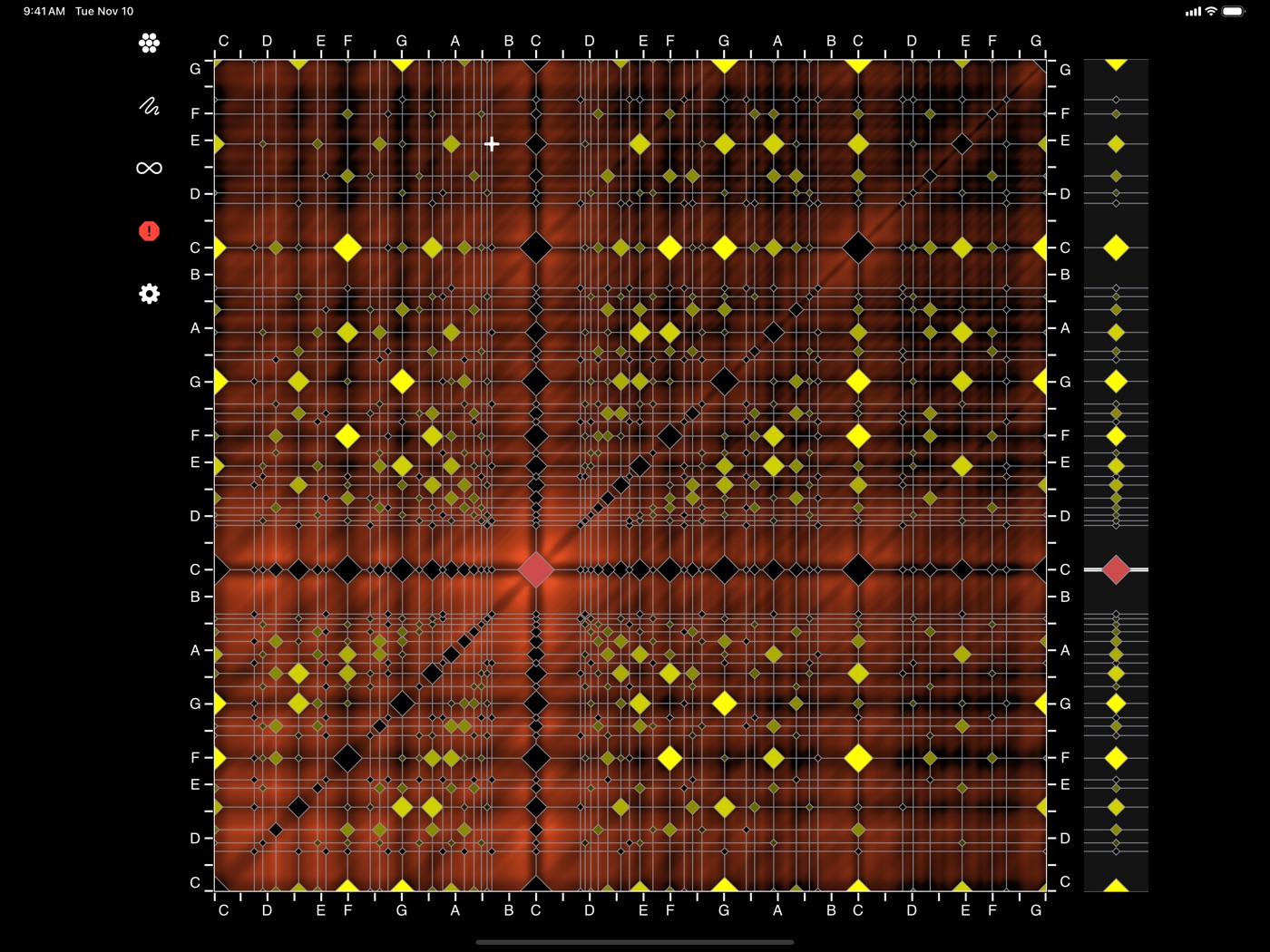
The dissonance field: bright where the tones beat hardest, dark where they settle.
Inside
Swift and SwiftUI, one codebase for iPad and Mac, with its own synthesizer built so each tone lands on exactly the frequency the ratio calls for. The source is open, under the MIT licence. A companion app, Seq, for recording and editing performances, is a work in progress and not ready for release.
Links
- App Store: Glass Bead Game III (iPad and Mac, free)
- Support: sohl.com/apps/glass-bead-game-iii
- User manual: setup, playing, settings and MIDI gear
- The theory: An Atlas of Consonance
- Source code: github.com/NormSohl/Glass-Bead-Game-III (MIT licence)